 Book Tickets
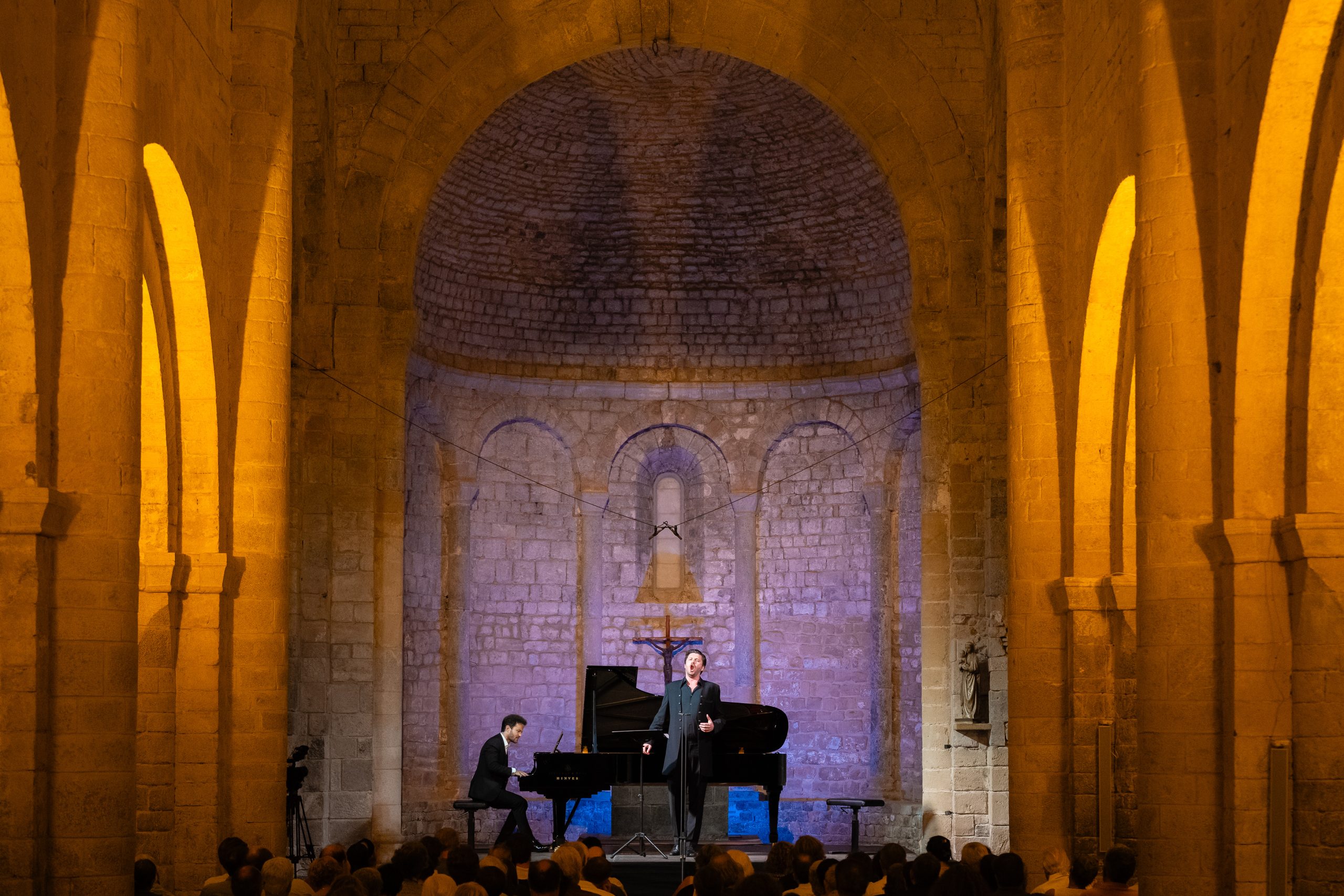
Summer in Empordà has a quality that is difficult to put into words: the light seems slower, the villages breathe at a different pace, and the landscape —between vineyards, sea, and stone— invites deeper listening. In this context, classical music finds a natural, almost organic space. Not as an external event, but as an extension of the territory.
In Empordà, summer is not only seen: it is heard and tasted. Between vineyards, medieval villages, and the golden light of the Costa Brava, classical music has found its own way of sounding. Not as an isolated event, but as a complete experience often accompanied by a glass of wine.
In this very specific geography, some festivals have built a clear identity: concerts in heritage spaces, wine pairings, and programming that turns music into part of the summer landscape.
Torroella de Montgrí Festival: classics with a European outlook
The Torroella de Montgrí Festival is one of the leading references for classical music in Catalonia. With a long-established trajectory, it has successfully combined symphonic repertoire, chamber music, and contemporary proposals in venues such as the church of Sant Genís or open-air stages around the town.
The experience is easily completed with the surrounding wine region. After a concert, it is common to visit nearby wineries from the Empordà Designation of Origin, where varieties such as Grenache or Macabeo provide a perfect counterpoint to the intensity of a string quartet or the clarity of a piano recital. The music lingers while the wine introduces another kind of tempo: slower, more grounded.
Castell de Peralada Festival: cultural luxury among gardens and vineyards
The Castell de Peralada Festival is probably the greatest symbol of the fusion between high culture, heritage, and sensory experience. Opera, recitals, and large productions take place in a unique setting: the castle gardens, surrounded by vineyards and nocturnal silence.
Here, wine pairing is not a metaphor but a reality. The Peralada project itself includes its own winemaking tradition, and audiences often experience the night as a complete journey: dinner in the gardens, concert under the stars, and a glass of wine from the same estate.
Music by composers such as Verdi or Puccini acquires an almost cinematic dimension in this setting, amplified by the closeness of the landscape and the sense of a once-in-a-lifetime event.
Sant Pere de Rodes Festival: spirituality and silence
The Sant Pere de Rodes Festival offers one of the most unique experiences of the Empordà summer. The Romanesque monastery, suspended between mountains and sea, turns music into a form of contemplation.
Here the dialogue with wine is more subtle but equally powerful. Wineries around Cap de Creus and Alt Empordà often produce mineral, fresh wines shaped by the tramontana wind. These wines seem to share the same luminous austerity of the place. A dry white or a local sweet Grenache can perfectly accompany the resonance of a Baroque choir or an early music programme.
Schubertíada Vilabertran: lied, intimacy, and precision
The Schubertíada Vilabertran is one of the most refined events of the summer musical calendar. Focused on the lied, chamber music, and vocal repertoire, it has turned the cloister of the Monastery of Santa Maria de Vilabertran into an international reference space for lovers of intimate music and vocal interpretation.
Here, the pairing with Empordà wines takes on an almost conceptual dimension: precise, elegant wines with long expression, in dialogue with the delicacy of German lied or the transparency of a string quartet. It is not about grandeur, but about nuance, silence, and detail. A glass of white Grenache or a lightly aged elegant red can be the perfect companion after a Schubert or Wolf recital, extending the sense of intimacy that defines the festival.
When wine and music share tempo
These festivals share not only programming, but also a way of understanding cultural experience. Classical music ceases to be a solemn act and becomes a full sensory experience, where landscape, heritage, and wine form part of the same narrative.
In Empordà, wine has character: it is Mediterranean, but also shaped by wind, salt, and light. Just like the music performed at these festivals, it does not aim only for formal perfection, but for emotional impact.
And perhaps that is the key to their success: in Empordà, a symphony does not end with the last note, and a glass of wine is not just a tasting. Both continue to speak to each other long after silence has returned.
