Book Tickets
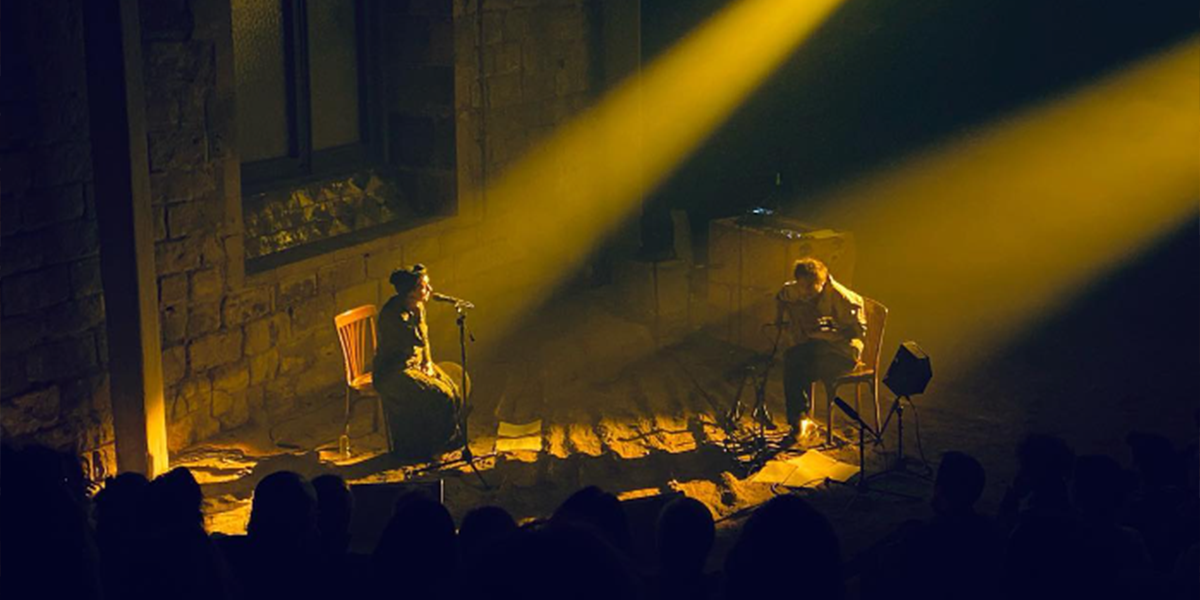
There are cities that become living scores, emotional landscapes where artists discover their own voice. This is precisely what journalist and writer Maricel Chavarría explores in Rosalía, por ahí por Barcelona, a book that transcends the conventional biographical portrait to become a sentimental and sonic map of contemporary Barcelona.
When an artist becomes a global phenomenon, there is often a temptation to explain their success as a spontaneous breakthrough. But Rosalía, por ahí por Barcelona, by cultural journalist Maricel Chavarría, moves in exactly the opposite direction: showing that behind Rosalía’s universe lies a city, a network of artistic education, and a hybrid musical scene that shaped her creative personality.
Chavarría traces the places, mentors, atmospheres, and influences that accompanied Rosalía during her formative years in the Catalan capital. The artist herself summarizes it with a phrase quoted in the book: “I learned boldness… somewhere around Barcelona.”
Barcelona as a musical landscape
The book turns the city of Barcelona into a character in its own right. The author travels through neighborhoods, schools, streets, and cultural spaces linked to Rosalía’s artistic development, revealing a city far removed from tourist clichés. Here we encounter the multicultural, creative, and contradictory Barcelona that nourished the artist’s sensitivity, shaped both by academic rigor and aesthetic experimentation.
From the dance school in Sant Esteve Sesrovires to the Sónar Festival, passing through Bar Pastís and the Palau Sant Jordi, Chavarría portrays a hybrid city where flamenco, rumba, jazz, rock, música laietana, pop, and sonic experimentation coexist. This cultural mixture emerges as one of the keys to understanding Rosalía’s ability to inhabit different musical languages without losing her identity.
For readers interested in classical music, this perspective is particularly stimulating. The book emphasizes the importance of training, discipline, and cultural environment in the making of an artist. Rosalía does not appear as an improvised figure, but as a creator shaped within a demanding tradition, supported by teachers, peers, and learning spaces that decisively contributed to her artistic growth.
Tradition and modernity: a constant dialogue
The book raises a central question in music history: how does tradition engage with innovation? Rosalía has been the subject of intense debate precisely because of the way she reinterprets the codes of flamenco and projects them into hybrid contemporary territories. Chavarría avoids simplistic readings and approaches these tensions from a rich and nuanced cultural perspective.
In this sense, the book connects with debates that also run through contemporary classical music. Many composers and performers today seek new forms of expression without abandoning their musical heritage. The tension between fidelity and reinvention is, after all, a constant throughout the history of music.
Particularly compelling is the journey the book traces through various influences and references: the connection with Enrique Morente, the artistic shadow of Sílvia Pérez Cruz, and the impact of Barcelona’s alternative circuits all appear as pieces of a very specific creative ecosystem.
A compelling read for curious music lovers
Although it exists outside the usual circuits of classical music, Rosalía, por ahí por Barcelona offers many stimulating reflections for music lovers. It speaks about musical pedagogy, artistic identity, creative risk, and the importance of cultural ecosystems in the formation of musicians.
At a time when stylistic labels are becoming increasingly blurred, Maricel Chavarría’s book invites us to listen with fewer prejudices and greater curiosity. And perhaps this is one of the most valuable lessons not only for classical music, but for any artistic expression: understanding that great transformations are almost always born from dialogue between seemingly distant worlds.